

Can I Sue for a Slip-and-Fall Injury on an Icy Sidewalk in Illinois?

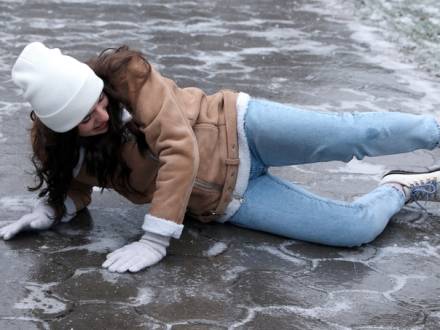
You can sue for an icy sidewalk injury in Illinois if someone else's negligence caused the dangerous condition. However, slipping and falling on ice alone isn’t enough to hold a property owner responsible.
Illinois premises liability law treats naturally formed ice differently from ice that builds up because of poor maintenance or a property issue. If you were injured on an icy sidewalk in 2026, our Chicago, IL premises liability lawyers can investigate what caused your fall and whether you have a claim.
How Does Illinois' Natural Accumulation Rule Affect a Slip-and-Fall Claim?
Under Illinois' natural accumulation rule, property owners usually do not have to remove snow or ice that forms naturally. This applies to outdoor sidewalks, entrances, walkways, and parking lots.
For example, ice left by freezing rain or snow that melts and refreezes without interference typically counts as a natural accumulation. The rule applies even if the ice remains for several days.
However, owners can face liability when their actions, poor maintenance, or defective property conditions create an unnatural accumulation. The key question is not simply whether the owner cleared the sidewalk, but how the ice formed and what caused you to fall.
What Counts as an Unnatural Accumulation of Ice in Illinois?
An unnatural accumulation forms when something other than ordinary weather causes ice to collect in a dangerous location. Examples include:
-
A broken gutter or downspout sending water across a sidewalk, where it freezes
-
A leaking pipe repeatedly creating ice near an entrance
-
Plowed snow piled where melting water flows across a walkway and refreezes
-
A poorly designed slope or drainage system directing runoff into a pedestrian path
Not every puddle, crack, or snow pile establishes negligence. You must connect the property condition to the ice and show that it caused your injury. Evidence that the owner knew or should have known about the hazard also matters.
Photographs showing the source of the water can be especially useful. Once temperatures rise, that evidence can disappear.
When Does the Illinois Snow and Ice Removal Act Protect Property Owners?
The Snow and Ice Removal Act, 745 ILCS 75/2, protects residential property owners and occupants who clear snow or ice from sidewalks next to the property. It also protects people who do that work on their behalf. They are not liable for injuries caused by their clearing efforts unless their conduct was willful or wanton, meaning more serious than ordinary carelessness.
That protection does not excuse negligent property maintenance. A defective drain that repeatedly creates dangerous ice can support a separate claim, even when someone also shoveled the sidewalk.
Chicago has another ordinance protecting people who remove snow from public sidewalks, with exceptions for serious misconduct and certain other violations. The sidewalk's location and the cause of the ice both matter.
Who Is Responsible for an Icy Public Sidewalk in Chicago?
Chicago requires owners and occupants of property along public sidewalks to clear snow and ice. Still, violating that ordinance does not automatically give an injured pedestrian the right to collect damages from the neighboring property owner.
Claims involving city sidewalks also require looking at who controlled the dangerous condition. Illinois protects local governments from many injuries caused by the effects of weather on public sidewalks.
A business can face a different claim when its broken drainage system or other property defect creates unnatural ice. Identifying the responsible party requires examining the sidewalk, surrounding buildings, and maintenance records.
What Evidence Can Help Prove an Illinois Icy Sidewalk Injury Claim?
Even after leaving the scene, you can take steps to preserve evidence of what caused your fall. If possible, return to the property to photograph the area where you slipped. Take pictures of nearby gutters, drains, slopes, or snow piles. Take close-up and wider photos. Remember that weather conditions can change quickly.
Report the fall to the property owner or manager if you have not already done so. Ask whether an incident report was prepared, and write down everything you remember about the accident while it is fresh. Save witness contact information, the shoes you wore, and photographs of your injuries. Seek medical care and follow your treatment plan.
An attorney can request surveillance footage, weather reports, and property maintenance records. These records can help establish how the ice formed, how long the dangerous condition existed, and whether the property owner had notice of the problem.
What Is the Deadline for an Icy Sidewalk Injury Lawsuit in Illinois?
Most Illinois personal injury lawsuits must be filed within two years of the injury under 735 ILCS 5/13-202. Claims against local public entities typically have a one-year filing deadline. Government immunity can create additional obstacles. Illinois does not impose a separate, blanket advance-notice requirement for these claims.
Your own actions can affect compensation, too. Illinois reduces damages according to your share of fault. If you are more than 50 percent responsible, you cannot recover damages.
Schedule a Free Consultation With Our Chicago Premises Liability Attorneys
Our award-winning attorneys have been fighting for accident victims since 1997. We know that an icy sidewalk claim often depends on details that disappear quickly, from drainage patterns to the condition of the walkway. We can investigate the property, gather evidence, and explain whether the law supports compensation for your injuries.
vIf you suffered a slip-and-fall injury in Chicago in 2026, contact Winters Salzetta O'Brien & Richardson, LLC at 312-236-6324 to speak with our Chicago, IL premises liability lawyers about your options.

Chicago, IL 60602


From our office in Chicago, Illinois, we help injured clients throughout the state including but not limited to Cook County, DuPage County, Kane County, McHenry County, Will County, Whiteside County, Lake County, Springfield, Rockford, Quad Cities, Waukegan, Peoria, Champaign, Bloomington, Normal, Rock Island, Kankakee, Joliet, DeKalb, Decatur and Wheaton.
Results listed are not a guarantee or indication of future case results.
111 West Washington Street, Suite 1200, Chicago, IL 60602
312-236-6324